
Medical Wristbands: PVC Patient ID vs PVC+Tab for Hospitals
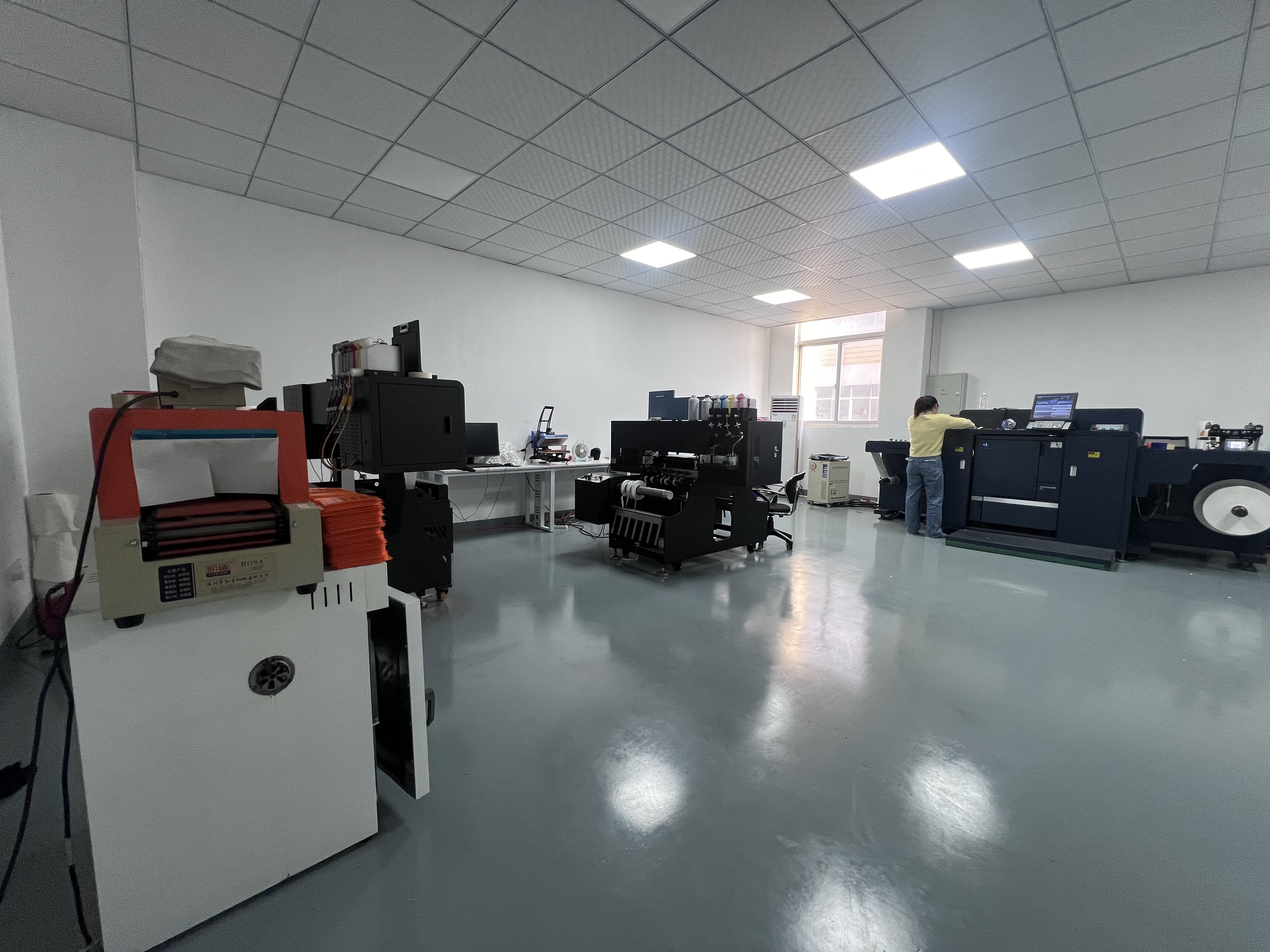
Custom printing stage for PVC wristband formats at the DDJOY production facility in Shanghai. Image: Digital Printing Workshop.
Short answer: for ward-based patient identification, the standard PVC patient ID wristband (listed at 250×25mm and 250×16mm) is the format specified around printable patient information, durability and comfortable wear, with hospitals and elderly care institutions named as its applications. The PVC+Tab wristband (listed at 260×40mm) uses the same PVC material but adds a tab buckle designed to be firm to wear and a larger pattern-printable surface, and its listed applications extend beyond healthcare into events, concerts and nightclubs. Because both formats are PVC, the buying decision comes down to printable area, closure design and application fit, not to which material is superior.
This guide is written for hospital procurement managers, nursing administrators and materials teams who have already narrowed the category to PVC and now have to choose a format. It separates what the product specifications actually state from what still has to be confirmed with a supplier, and it lists the documentation, sampling and lead-time questions that belong in the purchase specification.
The Real Question Behind PVC Patient ID vs PVC+Tab
The two formats are frequently shortlisted together because they share a material and a supplier category, which makes them look interchangeable. They are not interchangeable in use. The PVC patient ID wristband is specified as an identification band for hospitals and elderly care institutions, while the PVC+Tab wristband is specified for hospitals, events, concerts and nightclubs. That difference in stated applications is the clearest signal that the two formats are built to serve different operating environments, even when both are printed with an identifier.
In practice, hospital buyers resolve the question by fixing six specification drivers before they compare quotations:
- Data fields to be printed. The number and length of fields (patient name, medical record number, ward, admission date, allergy alert) determines how much printable surface is needed.
- Who applies the band and where. Admission desks, emergency departments and ward nursing teams apply bands at different speeds and with different levels of training.
- Wear duration and environment. A band worn through showering, bed transfers and clinical cleaning faces different demands from a band worn for a single shift.
- Closure expectation. Some programmes prioritise a firm, secure closure; others prioritise comfort for long wear on fragile skin.
- Print content type. Single-colour text fields, hospital logo printing and decorative pattern printing are not the same printing requirement.
- Reorder and logistics rules. Storage, batch control and reorder intervals shape how the band is packed and how often it is re-ordered.
Industry Background: What Is Changing in Identification Wristbands
Patient identification wristbands remain a high-volume consumable with steady institutional demand. The global patient identification wristbands market was projected to reach USD 576.1 million in 2025 (Future Market Insights, April 2025), and North America held a 41% share of that market in 2025 (Precedence Research). Published estimates differ widely depending on product definition, which is itself useful information for buyers: Future Market Insights and Precedence Research report materially different 2025 baselines, and the difference is generally attributed to whether blank wristbands alone or printed, system-integrated identification products are counted. Category size numbers should therefore be read as an indication of scale, not as a procurement benchmark.
Two regulatory and standards developments matter more directly to hospital specifications. First, the Court of Justice of the European Union ruled in Case C-427/24 that blank patient wristbands are not classified as medical devices under EU MDR 2017/745, effective 2 July 2026. Classification follows intended purpose, so a facility that prints patient data onto a band should be able to show how the intended use is defined and documented. Second, ISO 15223-1:2021 Amendment 1 (2025) updates medical device labelling symbols, including the authorised representative symbol that transitions from EC REP to EU-REP. Labelling requirements drift even when the physical product does not.
On the supply side, the category combines large identification-technology manufacturers with contract and OEM producers. Zebra Technologies reported net sales of USD 346 million for its Asset Intelligence & Tracking segment in Q4 2023, and PDC Healthcare, a Brady Corporation brand, holds a projected 14–18% share of the patient identification wristbands market (Future Market Insights, derived estimate). For most hospitals and care groups outside very large group purchasing organisations, the practical supply route remains an OEM manufacturer that produces to a hospital-supplied specification.
PVC Patient ID Wristband: Printable Information, Durable and Comfortable Wear
The PVC patient ID wristband is a PVC identification band supplied in two listed sizes, 250×25mm and 250×16mm, with the specification listing printable patient information, durability and comfortable wear, and naming hospitals and elderly care institutions as the application environments. The same manufacturer family also lists a PVC one or two-layer wristband in the same two sizes, with a single or double layer structure and logo or text printing, applied in hospitals, events, enterprises and entertainment venues.
Three format details follow from that specification and matter at the evaluation stage:
- Width is a data decision. The 25mm band provides more printable height than the 16mm band, which is relevant when several fields or larger type are needed for legibility at the bedside.
- Layer structure is a format decision. The one or two-layer variant is the option where a double-layer construction is preferred; the specification links it to logo or text printing, not to pattern printing.
- Comfort is a stated property, not an assumption. Comfortable wear is listed for this format, which matters for patients who keep a band on for an entire admission and for elderly residents in long-stay care.
The specification does not state a closure mechanism, a wear duration or a cleaning tolerance for the PVC patient ID format. Those are confirmation items, not assumptions, and they should be settled on a sample before a tender is finalised. Where a facility needs clinical data printed at the point of care by a direct thermal printer, that is a separate material route: the medical thermal wristband line is listed as thermal-sensitive synthetic paper at 260×25mm with direct thermal printing, water-resistant and tear-resistant properties. It is a different product from the PVC formats in this comparison and should be specified on its own merits.
PVC+Tab Wristband: Tab Buckle Closure and Pattern-Printable Surface
The PVC+Tab wristband is a PVC band listed at 260×40mm with a tab buckle design described as firm to wear and a pattern-printable surface, applied in hospitals, events, concerts and nightclubs. The material is PVC, as with the patient ID format, so the differences are structural and graphical rather than chemical.
Three consequences are worth checking against a hospital specification:
- The tab buckle is the defining feature. The format is specified around the tab closure and firm wear, which is the property to verify with a wear trial on the actual patient population rather than by reading the sheet.
- The 40mm band width supports printed patterns and graphics. Pattern printing is a listed capability of this format, so it suits programmes where a logo, campaign graphic or colour-coded zone must be visible on the band in addition to identification content.
- Applications are broader than healthcare. The same format is listed for concerts and nightclubs, which means it is engineered to work in high-throughput access-control environments as well as clinical ones. That breadth is useful context, but hospital buyers should still confirm that the printed field layout, wear duration and disposal route match clinical requirements.
There is field evidence that tab-closure, pattern-printed formats perform in high-volume identity verification. A global event organiser deployed 120,000 custom printed wristbands for a music festival, using participant identity verification and access control; the wristbands featured a tamper-proof one-time closure, tear-resistant and waterproof material and full-colour custom printing. The project achieved 40% faster on-site check-in efficiency and zero counterfeit admission incidents. This is an event project rather than a hospital project, so it should be read as evidence that print-heavy, secure-closure formats can be delivered at scale, not as clinical evidence.
Head-to-Head: PVC Patient ID vs PVC+Tab Wristband
The table below compares only the properties stated in the supplied product specifications. Entries marked as not stated are confirmation items for the supplier, not negative findings.
| Comparison point | PVC Patient ID Wristband | PVC+Tab Wristband |
|---|---|---|
| Material | PVC | PVC |
| Listed sizes | 250×25mm; 250×16mm | 260×40mm |
| Structure / closure as specified | Not stated in the specification; format is defined by its identification function | Tab buckle design, specified as firm to wear |
| Printable content as specified | Printable patient information | Pattern printable |
| Stated wear characteristics | Durable, comfortable to wear | Firm to wear |
| Stated applications | Hospitals; elderly care institutions (patient identification) | Hospitals; events; concerts; nightclubs |
| Related format in the same family | PVC one or two-layer wristband, 250×25mm / 250×16mm, logo or text printable, hospitals / events / enterprises / entertainment venues | PVC one or two-layer wristband, 250×25mm / 250×16mm, logo or text printable |
| Best-fit procurement scenario | Ward, admission and long-stay care identification where printable patient data and comfortable wear are the priorities | Programmes needing a firm tab closure plus printed graphics, including mixed healthcare and venue-based identity checks |
| Open items to confirm with the supplier | Closure mechanism, wear duration, cleaning tolerance, paediatric sizing | Field layout on the 40mm surface, clinical wear duration, disposal route |
Use Cases: Matching the Format to the Ward or the Venue
Format selection is easier when it is mapped to the point of application rather than to a general preference.
Admission and outpatient identification
High daily volumes and short application time favour a band with a large, clear printable information area. Where name, record number and ward are all required, the 25mm width is the more forgiving surface; the 16mm band suits shorter field sets or smaller wrists.
Emergency, ICU and surgical patient identification
Continuous wear across monitoring, transfers and hygiene routines makes durable construction and comfortable wear the primary criteria, both of which are stated properties of the PVC patient ID format. Where a facility requires strict single-use handling, the disposal route must be confirmed with the supplier rather than inferred.
Elderly care and nursing home wristbands
The PVC patient ID format names elderly care institutions specifically, which makes it the default starting point for long-stay resident identification, where comfort over weeks of wear matters more than print richness.
Baby identification and paediatric wards
Smaller wrist circumferences sit at the edge of any fixed-size band. The starting point is the narrower 250×16mm listing; if the smallest wrist in the unit falls below that, sizing and closure must be raised as a custom requirement rather than assumed.
Isolation wards and diagnostic departments
These units typically add workflow constraints rather than new format requirements: how quickly a band is applied at the ward entrance, and whether it is replaced between departments. Both formats can be specified once the print fields and closure expectation are fixed.
Where the PVC+Tab format earns its place
The tab closure and pattern-printable surface are the reason to choose this format. It fits hospital programmes that want visible branding or colour coding on the band itself, and it is also the format the manufacturer lists for concerts, events and nightclubs, where identity verification happens at speed and the printed design doubles as access control.
Step-by-Step: How to Specify and Validate a PVC Wristband Order
Step 1 – Define the printed field set
List the exact fields the band must carry and the minimum legible type size. This decision determines whether the 16mm or 25mm band is enough, and it prevents reprints later in the project.
Step 2 – Select the format and layer structure
Choose between the PVC patient ID format, the PVC one or two-layer structure and the PVC+Tab format, based on the closure expectation and whether pattern printing is required.
Step 3 – Confirm the printing route and approve artwork
Logo, text and pattern artwork needs to be approved against the actual band width before production. Production capacity for custom printing exists on both digital and flexographic printing lines, which is relevant when a programme mixes short reorders with larger annual volumes.
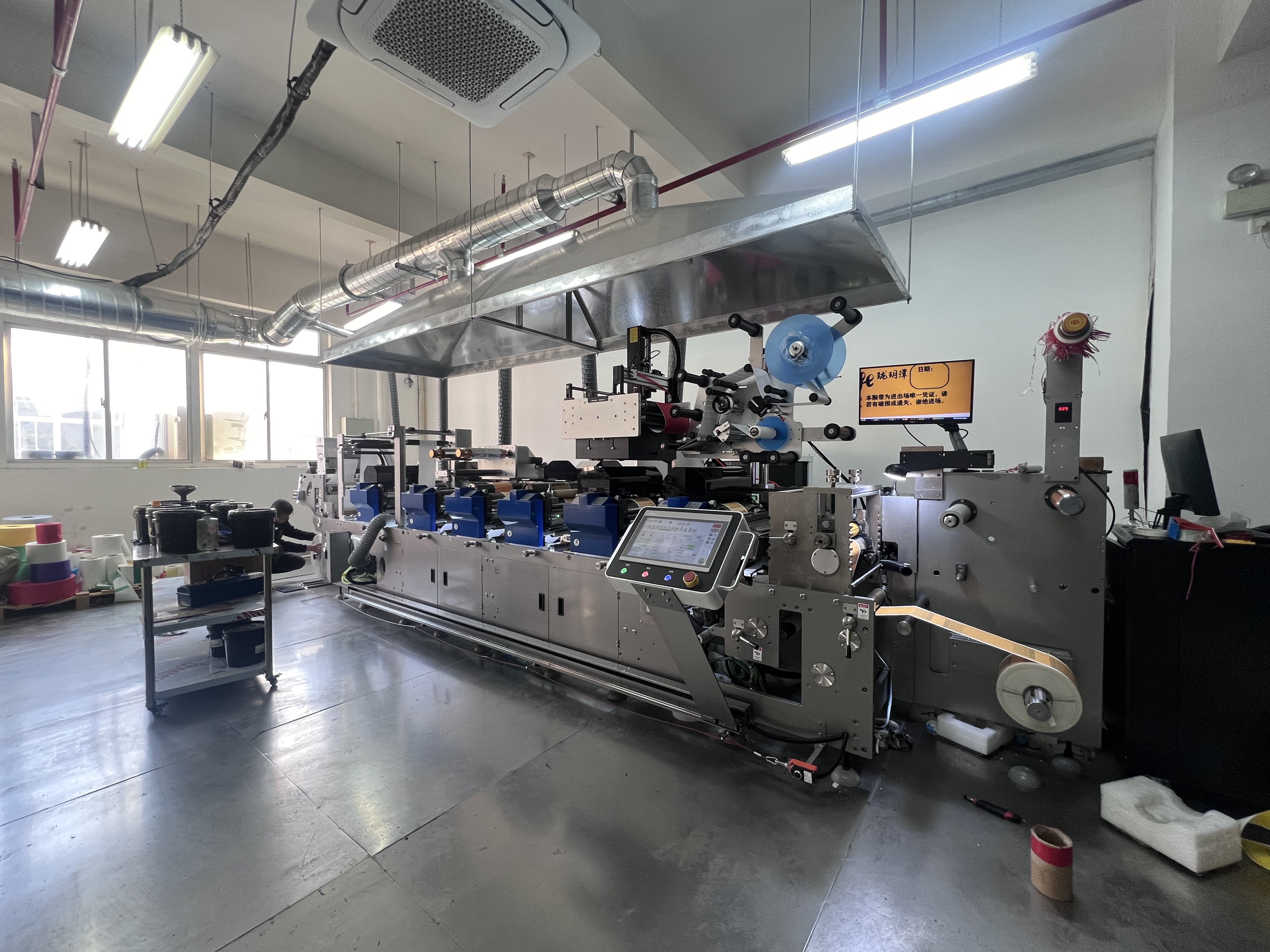
Custom printing capacity for wristband programmes: Flexographic Printing Workshop.
Step 4 – Validate with samples and a wear trial
Sample validation is the stage where closure behaviour, print contrast and comfort are tested on real wrists in the real ward, before an annual quantity is committed.
Step 5 – Lock MOQ, lead time and quality control
OEM terms include a minimum order quantity of 1,000 units, a standard lead time of 7–10 working days and 100% product testing as part of quality control. Buyers should also confirm whether the specification calls for logo customisation, since that shapes the artwork approval step.
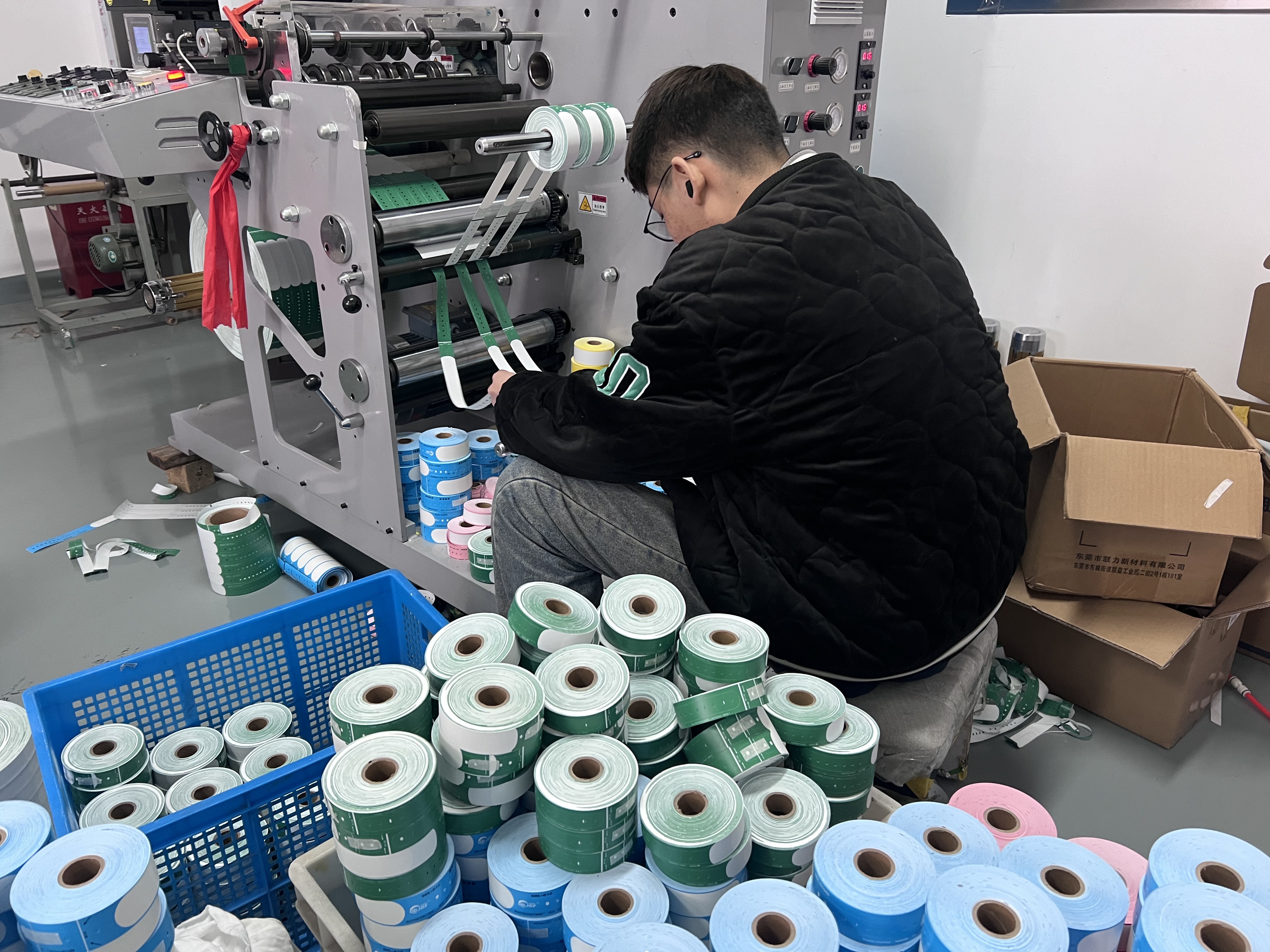
Die-cutting stage where wristband formats are produced to the specified dimensions: Die-cutting Workshop.
Step 6 – Fix the reorder and storage plan
Wristbands are a repeat consumable, so the storage location, batch rotation and reorder interval belong in the same document as the specification. Material inventory planning upstream directly affects how quickly a reorder can be produced.
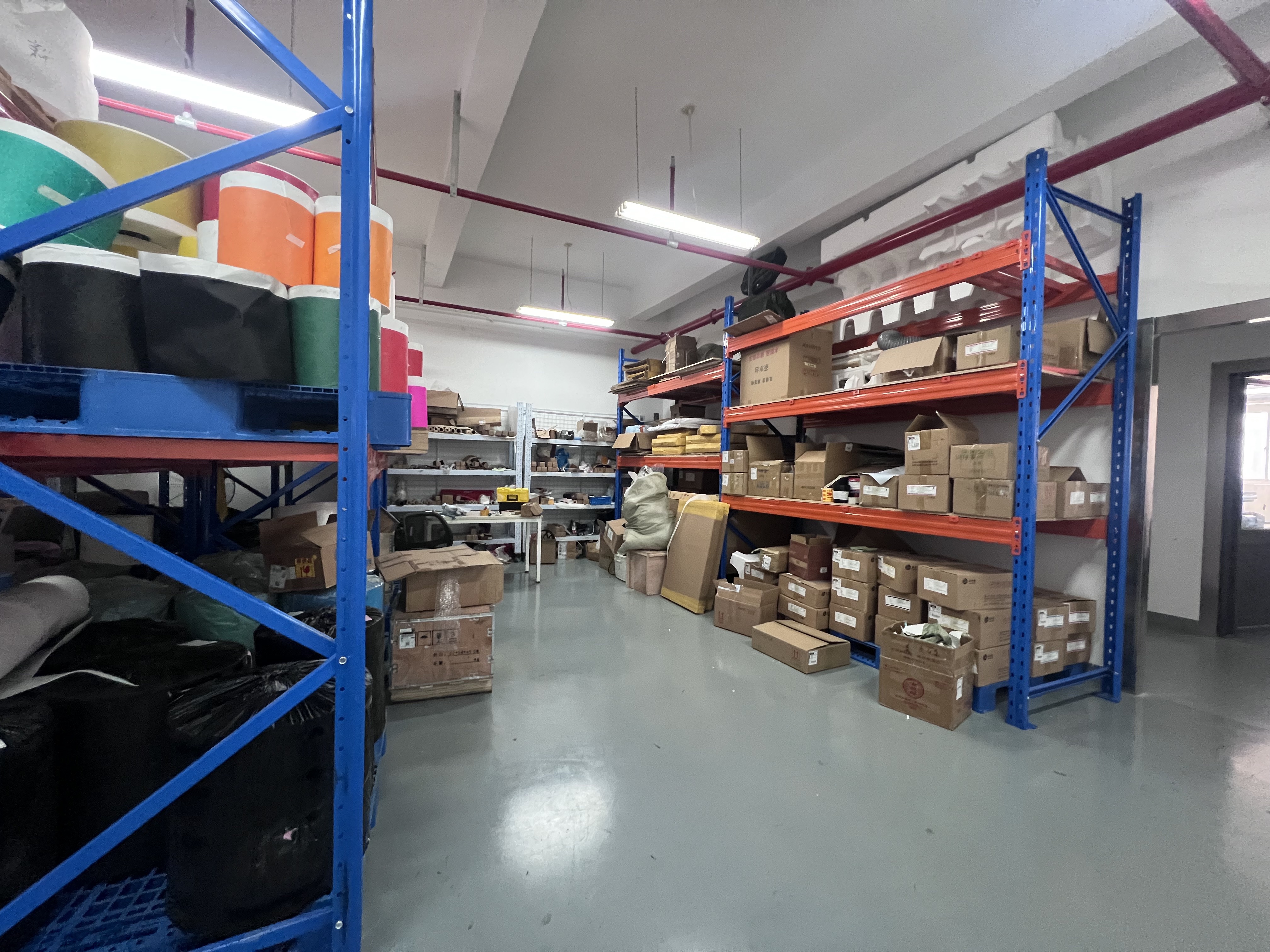
Raw material inventory supporting wristband production schedules: warehouse of material.
Documentation to Attach to the Specification
At the evaluation stage, documentation is often what separates a compliant bid from a delayed one. Three document types are relevant to a PVC wristband purchase.
- Restricted-substance compliance. An EU RoHS Certificate of Compliance (certificate number TST20250302350EC) was issued on 14 March 2025 by Dongguan True Safety Testing Co., Ltd., covering RoHS 2.0 restricted-substance requirements under Directive (EU) 2015/863 and (EU) 2017/2102, tested against the IEC 62321 series. The stated scope of that certificate is paper wristband. Buyers ordering PVC formats should therefore request the compliance document whose scope names the exact material and product being purchased — a valid certificate for a different material does not cover the order.
- Quality management. ISO 9001 certification is held by the manufacturer, supported by Alibaba and SGS on-site verification. On-site verification is useful evidence for buyers who cannot audit a factory directly.
- Regulatory context for the EU. Because the CJEU ruling of 2 July 2026 treats blank patient wristbands as outside the medical device definition under EU MDR 2017/745, classification depends on intended purpose. A hospital specification should therefore state the intended use and the labelling expectations, including the EU-REP symbol transition introduced by ISO 15223-1:2021 Amendment 1 (2025).
FAQ: PVC Patient ID and PVC+Tab Wristbands for Hospital Buyers
Are PVC patient ID wristbands classified as medical devices in the EU?
No blanket classification applies. The Court of Justice of the European Union ruled in Case C-427/24 that blank patient wristbands are not classified as medical devices under EU MDR 2017/745, effective 2 July 2026, so classification follows the intended purpose rather than the product category. For a hospital programme, that means documenting the intended use of the printed identification band and checking that the supplier documentation you receive names the correct product and material scope.
Can both PVC formats carry patient information and hospital branding?
Yes, within their stated capabilities. The PVC patient ID wristband specification lists printable patient information, while the PVC+Tab format lists pattern printing and the PVC one or two-layer variant lists logo or text printing with a single or double layer structure. Customisation includes logo printing, and production is supported by both digital and flexographic printing workshops. The practical verification step is a printed sample on the actual band width, since type size and field layout behave differently on a 16mm band, a 25mm band and a 40mm band.
What order quantity and commercial terms should a hospital expect?
OEM orders start at a minimum order quantity of 1,000 units, with a standard lead time of 7–10 working days and 100% product testing under the manufacturer's quality control process. Because pricing follows the confirmed specification, the practical way to manage budget is to fix the specification variables first — format, width, layer structure, print coverage, artwork and packaging — and then compare quotations against that identical document, rather than comparing quotes built on different assumptions.
Can we validate the format before committing to a volume order?
Sample validation is the recommended step between shortlisting and mass production. A sample lets the evaluation team check closure behaviour, comfort over a shift or longer, print legibility at bedside distance and artwork reproduction on the full pattern-printed surface. Sample requests, specification questions and quotations can be sent to DDJOY Medical Wristbands at DDJOY02@163.com or +86 13636648748 (WhatsApp available), which is the fastest route to a format recommendation based on your field set.
What is the standard lead time, and what can delay it?
The standard lead time is 7–10 working days. Known delay risks include shortages or quality problems in upstream materials such as PVC, Tyvek and RFID chips; order surges without reserved monthly capacity; internal production issues such as equipment breakdown, labour shortage or rework; late specification confirmation or repeated revisions from the buyer; and logistics congestion, port delays or power restrictions. The corresponding mitigations are advance production scheduling, reserved monthly capacity for large-volume orders, and coordinated rush production for urgent orders — all of which are easier to arrange when the specification is frozen before the order is placed.
Conclusion: The Decision Rule for Hospital Buyers
For PVC medical wristbands, the format question is answered by purpose rather than preference. Choose the PVC patient ID wristband at 250×25mm or 250×16mm when the programme is ward-based patient identification in a hospital or elderly care institution and the priorities are printable patient information, durability and comfortable wear. Choose the PVC+Tab wristband at 260×40mm when the same PVC band must also carry printed patterns and a tab buckle specified as firm to wear, and where the manufacturer's listed applications — hospitals, events, concerts and nightclubs — match your operating environment. In both cases, confirm the unstated properties on a sample, and request compliance documents whose scope names the exact product and material you are buying.
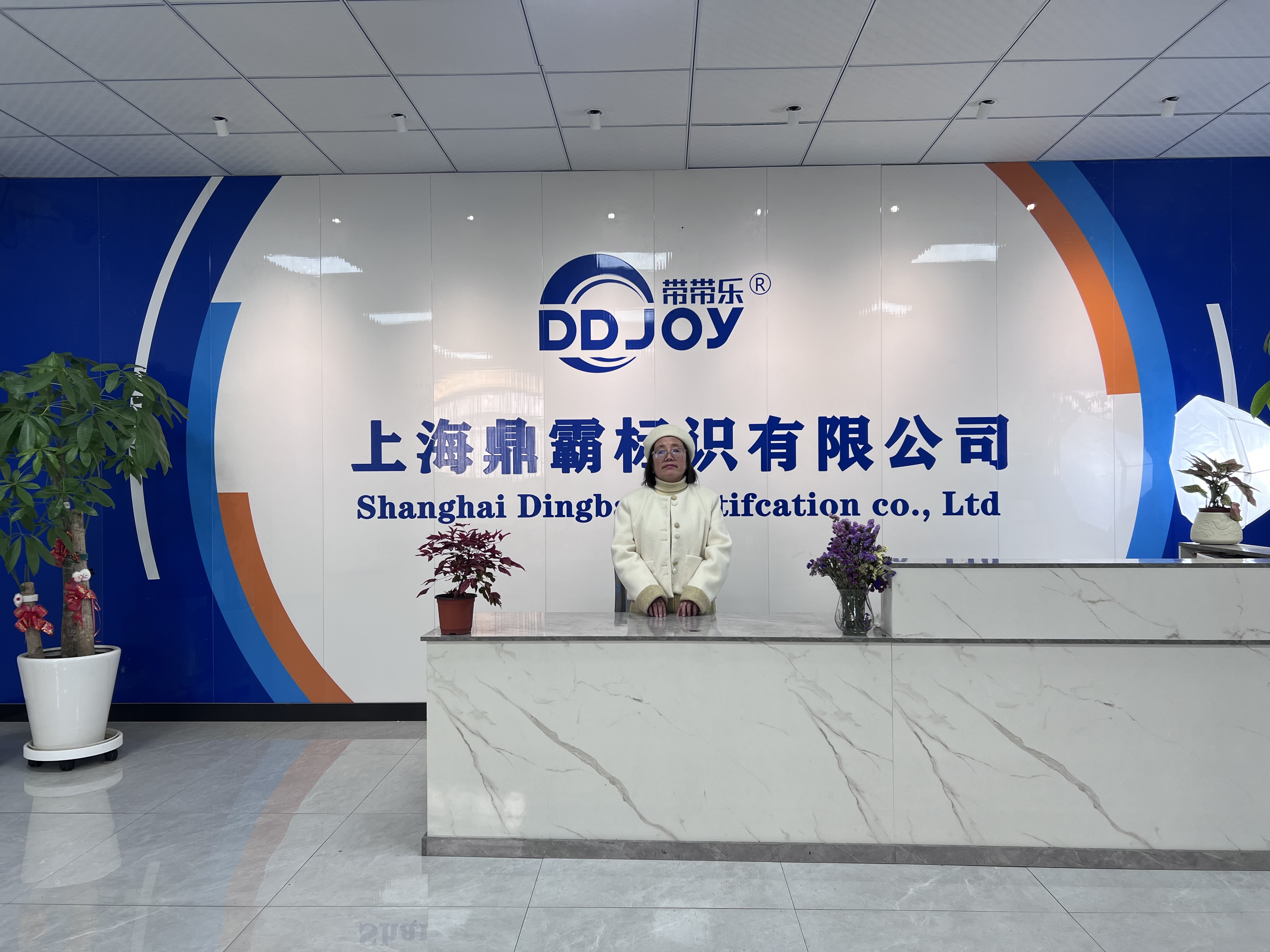
Shanghai Dingba Identification Co., Ltd. manufactures wristbands and RFID products from its Shanghai facility.
Next step: compare the two formats on your own specification
Send your printed field list, target band width and closure expectation to DDJOY Medical Wristbands, and request samples of the PVC patient ID and PVC+Tab formats for a wear trial. Contact: DDJOY02@163.com · +86 13636648748 · WhatsApp available. Product detail: ddlf.com.
Full product and capability overview: Download the Shanghai Dingba Identification catalogue (PDF).
Have Questions or Need More Details?
Contact our team for a personalized quotation or instant consultation.
Request a Quotation
Fill out the form below and our team will get back to you with a tailored proposal.
WhatsApp Direct Chat
Prefer to chat in real-time? Message us on WhatsApp for instant assistance & quick answers.
- Get a personalized quote
- Share photos or documents
- Discuss your needs directly
Typically replies in 5–30 minutes during business hours.