Medical Wristband Supplier Vetting: Capability Verification and Delivery Assurance
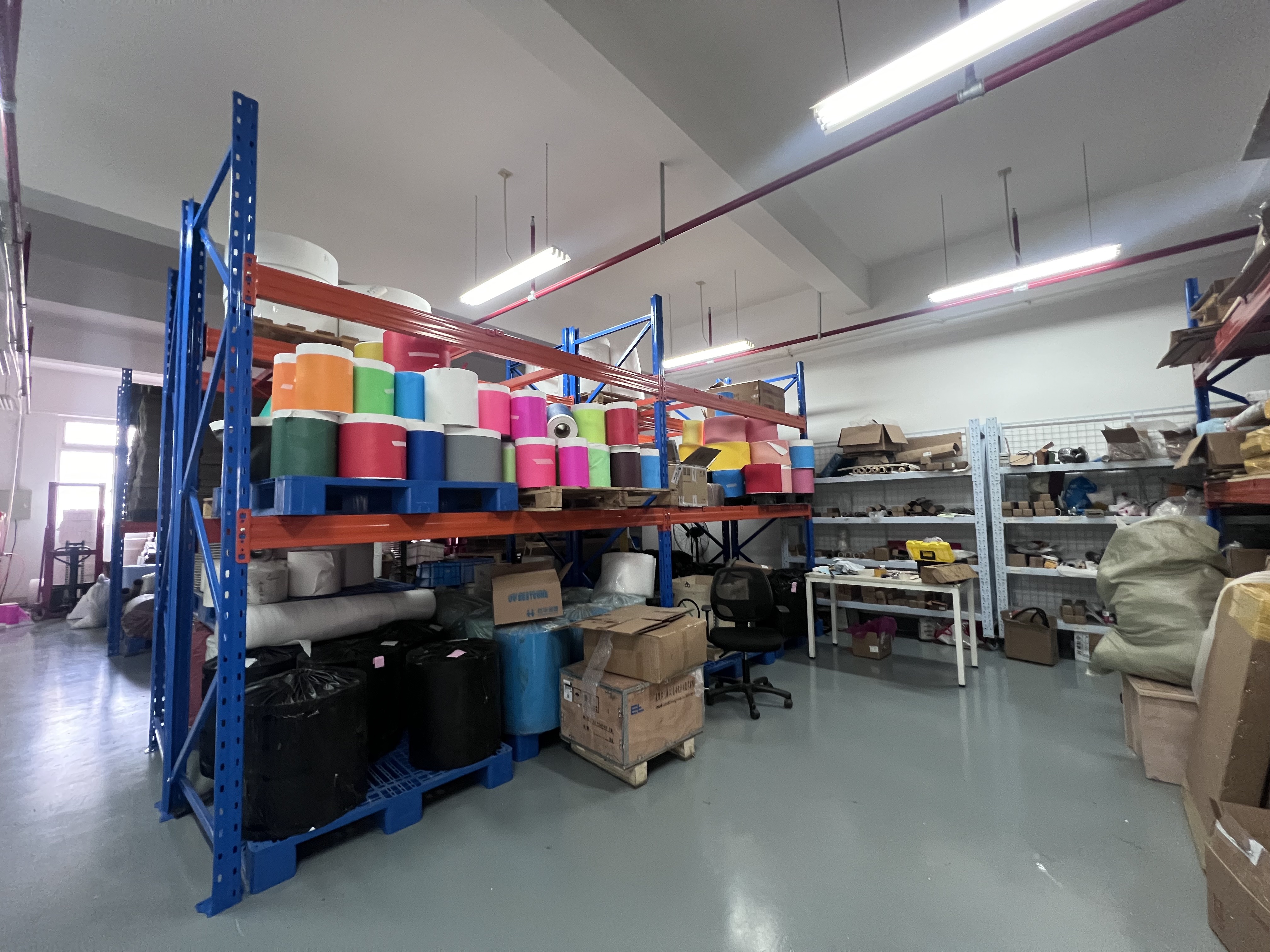
Medical wristband sourcing rarely fails because a supplier cannot make a wristband. It fails because the buyer verifies the wrong thing. A quotation confirms a unit price, a minimum order quantity and a delivery term; it does not confirm that a factory can hold a 260 × 25 mm direct-thermal format, keep a tamper-evident closure consistent across a full run, or repeat the same print register on the second and third production batch. This guide sets out a two-track supplier evaluation framework: capability verification, which tests what the factory can actually produce, and delivery assurance, which tests what the buyer can actually check before the goods leave. Both tracks are then applied to the DDJOY-Medical Wristbands portfolio manufactured by Shanghai Dingba Identification Co., Ltd.
Problem Definition: Why Medical Wristband Supplier Evaluation Breaks Down
A medical wristband is not one product. It is three products assembled into one item: a material substrate, a printed data carrier, and a closure mechanism. Suppliers quote on the finished item, but hospitals accept or reject on all three dimensions separately. That mismatch is where most evaluation failures originate.
Two failure patterns repeat across hospital and care-sector procurement.
- Portfolio without process depth. A supplier lists PVC, Tyvek, thermal, RFID, holographic and custom labels in the same catalogue, but cannot answer which physical line produces which band, or which print method sits behind each specification. Band type names travel easily between suppliers; printing equipment does not.
- Delivery treated as a number. A buyer accepts a quoted lead time without checking how production is scheduled, how capacity is reserved for larger orders, or how the finished run is verified. Lead time becomes an assumption rather than a managed commitment.
There is a third, newer complication. The Court of Justice of the European Union (CJEU) ruled that blank patient wristbands are not classified as medical devices under EU MDR 2017/745 (Case C-427/24), effective 2 July 2026. The classification turns on intended purpose and on whether the band is supplied blank or supplied as part of a system with a defined medical function. The practical consequence for buyers is significant: you cannot outsource the specification work to a supplier certificate. If classification follows intended purpose, then the intended purpose has to be written down by the purchasing organisation before the RFQ goes out.
Industry Background: A Category Growing Inside a Regulatory Shift
The commercial picture is useful context for sizing a supply relationship, but it should be read carefully. Future Market Insights projects the global patient identification wristbands market to reach USD 576.1 million in 2025. Precedence Research reports that North America held a 41% share of that market in 2025.
The two headline market-size figures do not agree. Future Market Insights estimates USD 576 million for 2025, while Precedence Research estimates USD 1.61 billion for the same year. The published methodology notes point to a definitional split: one dataset tracks blank patient ID wristbands, the other appears to include a broader set of identification accessories and system-integrated products. The honest reading is that market sizing in this category is directional, and any figure should be checked against the product definition it uses before it is put into a business case.
Adjacent data confirms that identification hardware is a substantial industrial segment rather than a niche. Zebra Technologies reported net sales of USD 346 million in its Asset Intelligence & Tracking (AIT) segment — which includes wristbands — in Q4 2023. On the specialist side, PDC Healthcare, a Brady Corporation brand, holds a projected market share of 14–18% in the patient identification wristbands market.
Regulatory movement continues alongside the commercial growth. ISO 15223-1:2021 Amendment 1 (2025) introduces a change to the authorized representative symbol, transitioning from EC REP to EU-REP. For wristbands that do fall within device scope, or that are supplied inside a device system, that symbol change reaches the labelling artwork — and labelling artwork is produced by the same printing lines that produce the band itself.
What the background means for supplier evaluation
- Market-size figures vary by definition — ask which product scope a number covers.
- Blank wristbands sit outside EU MDR device classification, so specification ownership stays with the buyer.
- Labelling symbol changes (EC REP → EU-REP) mean the supplier's print artwork process is a compliance-relevant capability, not a design detail.
Detailed Solution: Mapping the Portfolio to Verifiable Capability
Capability verification asks one question for every band type a supplier lists: which machine, which material and which process makes this item? DDJOY-Medical Wristbands is the medical wristband range produced by Shanghai Dingba Identification Co., Ltd., a company established in Shanghai, China in 2010 that develops and manufactures wristbands and RFID products. Its portfolio spans medical thermal wristbands, PVC patient ID wristbands, PVC 1- and 2-layer wristbands, PVC+Tab wristbands, Tyvek wristbands, RFID wristbands, holographic wristbands, ribbon wristbands, polyester wristbands and lanyards, cartoon wristbands, and custom labels.
Portfolio-to-capability map
| Product | Material and format | Printing and finishing | Typical fit |
|---|---|---|---|
| Medical thermal wristband | Thermal-sensitive synthetic paper; 260 × 25 mm, customizable | Direct thermal printing (no ink, no ribbon); water-resistant and tear-resistant surface | Hospitals, medical clinics, healthcare institutions, patient management |
| PVC Patient ID wristband | PVC; 250 × 25 mm / 250 × 16 mm | Printable patient information; durable and comfortable to wear | Hospitals, elderly care institutions, patient identification |
| PVC 1- or 2-layer wristband | PVC; 250 × 25 mm / 250 × 16 mm | Single or double layer structure; logo and text printable | Hospitals, events, enterprises, entertainment venues |
| PVC+Tab wristband | PVC; 260 × 40 mm | Tab buckle design; pattern printable | Hospitals, events, concerts, nightclubs |
| Tyvek wristband | Tyvek; 250 × 19 mm / 250 × 25 mm | Disposable; tear-resistant and waterproof; clear printing | Hospitals, exhibitions, events, ticketing |
| RFID wristband | Silicone, PVC, Tyvek or paper; 250 × 25 mm / 250 × 16 mm | Built-in RFID chip, LF / HF / UHF optional; readable and writable | Medical, events, access control, logistics and warehousing, member management |
| Holographic wristband | PVC or paper with holographic film; 250 × 25 mm / 250 × 16 mm | Holographic anti-counterfeiting printing; waterproof and tear-resistant; one-time lock closure | Concerts, exhibitions and festivals, access control and anti-counterfeiting |
| Cartoon wristband | Paper or Tyvek; 200 × 20 mm | Cartoon pattern printing with bright colors | Children's activities, theme parks, kindergartens, exhibitions |
| Ribbon wristband | Ribbon / polyester webbing; 350 × 15 mm | Woven ribbon; custom text and logo printable; soft and comfortable | Weddings, fashion accessories, events |
| Polyester wristband | Polyester; 350 × 15 mm, length customizable | Custom logo and text printable; wear-resistant and washable | Sports, events, enterprise promotion, employee badges |
| Polyester lanyard | Polyester; 900 × 15 / 20 / 25 mm | Metal or plastic buckle; custom text and logo printable | Exhibitions, enterprises, schools, events, ID badge lanyards |
| Custom label | Paper, PVC, self-adhesive, synthetic paper; any customizable size | Offset printing, digital printing and hot stamping optional | All industries |
Material capability: what "waterproof and tear-resistant" has to mean in practice
Material verification should be anchored to a measured format, not a category name. In the DDJOY-Medical Wristbands range, the medical thermal wristband is specified at 260 × 25 mm with customizable size, on thermal-sensitive synthetic paper, with a water-resistant and tear-resistant surface that accepts printable patient information. The PVC Patient ID wristband is supplied at 250 × 25 mm and 250 × 16 mm in PVC, printable with patient information and described as durable and comfortable to wear. The Tyvek wristband is supplied at 250 × 19 mm and 250 × 25 mm, disposable, tear-resistant and waterproof with clear printing.
The RFID wristband is a different material problem altogether. It is available in silicone, PVC, Tyvek or paper at 250 × 25 mm and 250 × 16 mm, with a built-in RFID chip that can be specified as low frequency, high frequency or ultra-high frequency, readable and writable. The holographic wristband uses PVC or paper with holographic film at 250 × 25 mm and 250 × 16 mm, combining holographic anti-counterfeiting printing with a one-time lock closure on a waterproof, tear-resistant band.
For a hospital buyer, the verification action is the same in each case: ask for the material grade and the measured dimensions behind the description, and confirm which of the listed formats the supplier is actually committing to.
Printing capability: one ink-free method and three ink-based options
Printing method is the capability that separates suppliers most clearly, because it determines tooling, run economics and variable-data behavior.
- Direct thermal printing is used for the medical thermal wristband. The image is generated within the thermal-sensitive coating on the stock, so the process uses no ink and no ribbon. For ward-level operations this changes the consumables model: printing becomes a printer-and-stock activity rather than an ink-management activity.
- Offset printing is offered within the custom label range — a process suited to stable, high-volume artwork.
- Digital printing is also offered for custom labels, and is the natural fit for variable data, shorter runs and version changes.
- Hot stamping is available as an optional finishing process on custom labels.
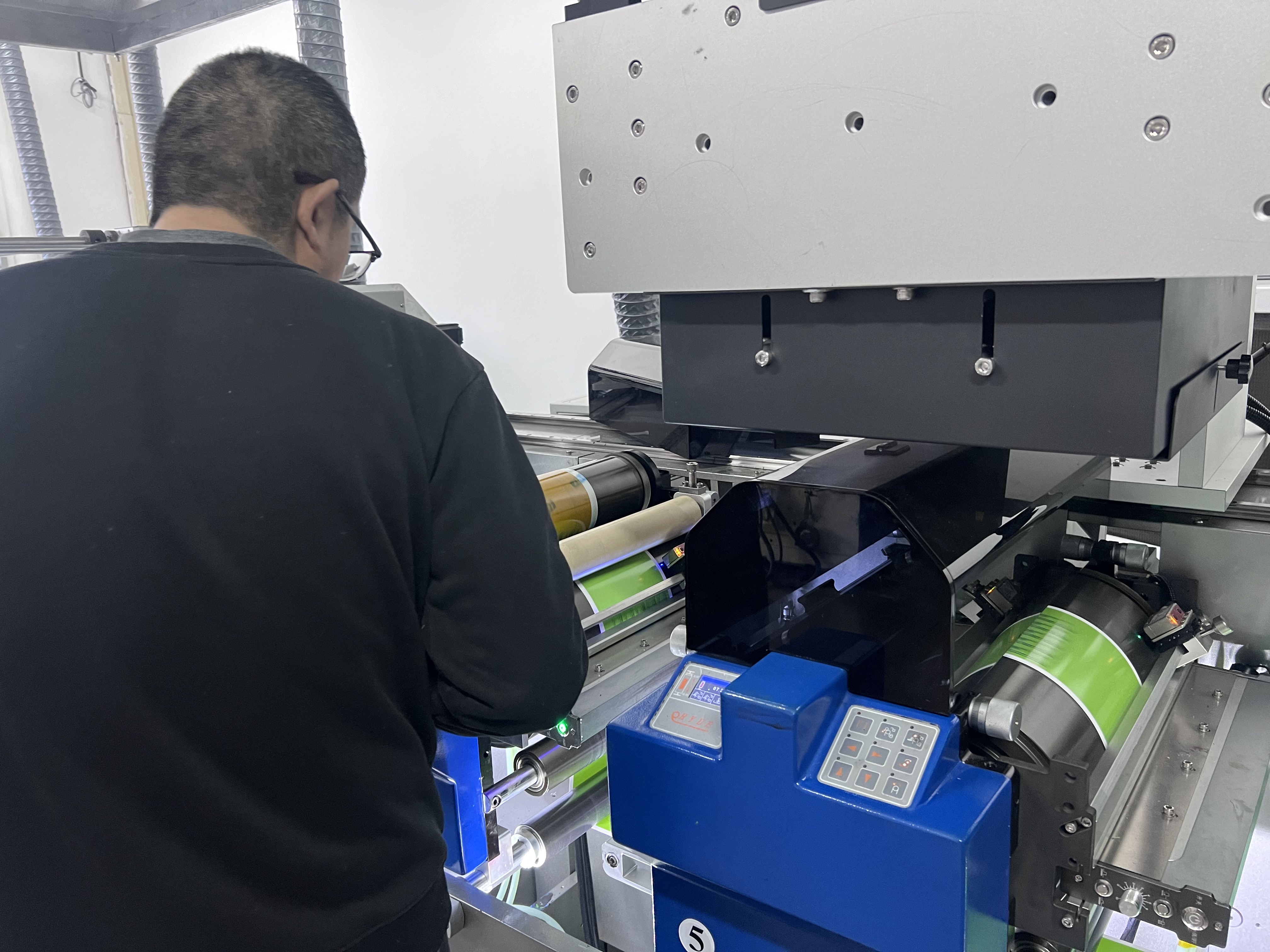
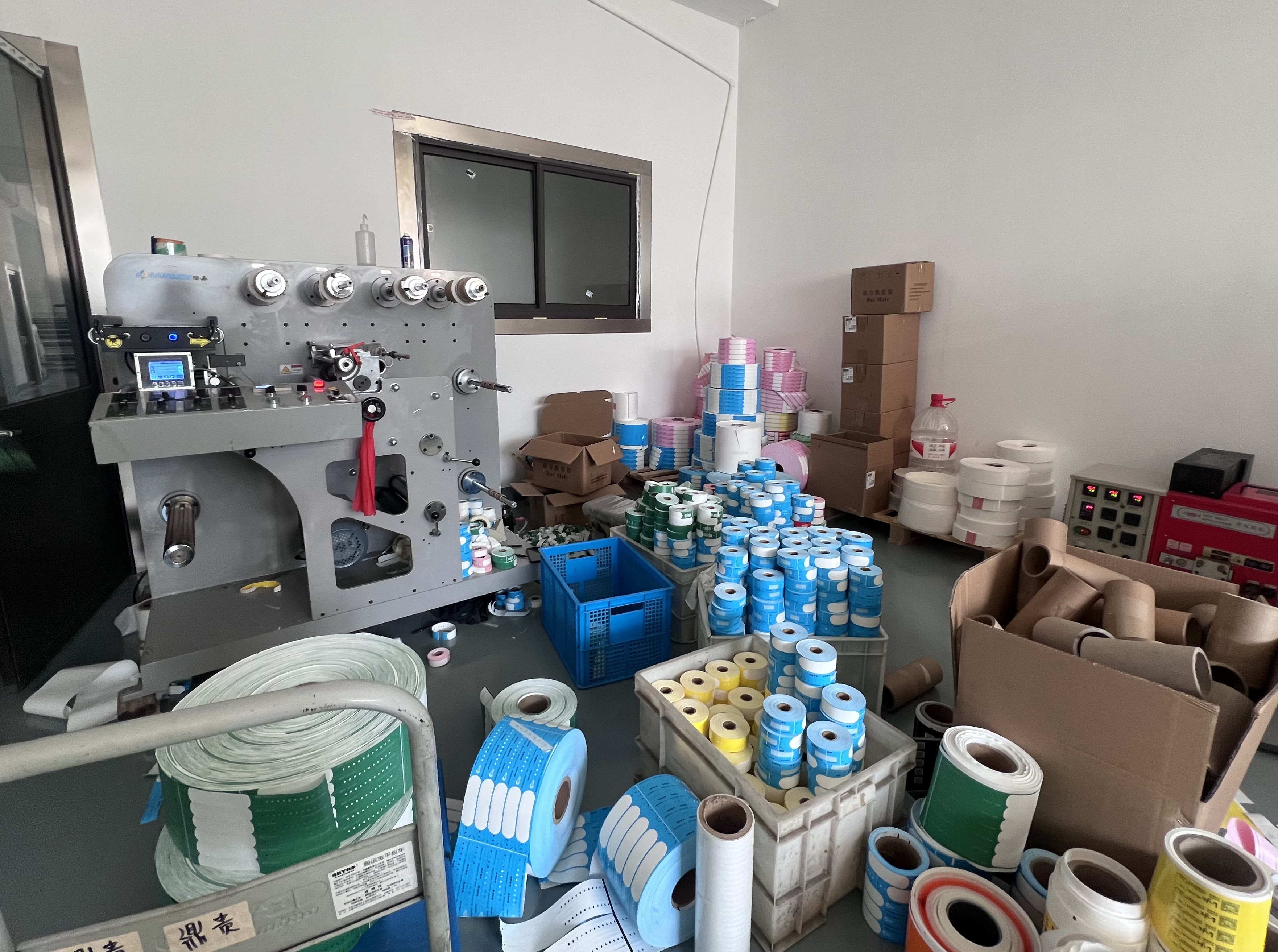
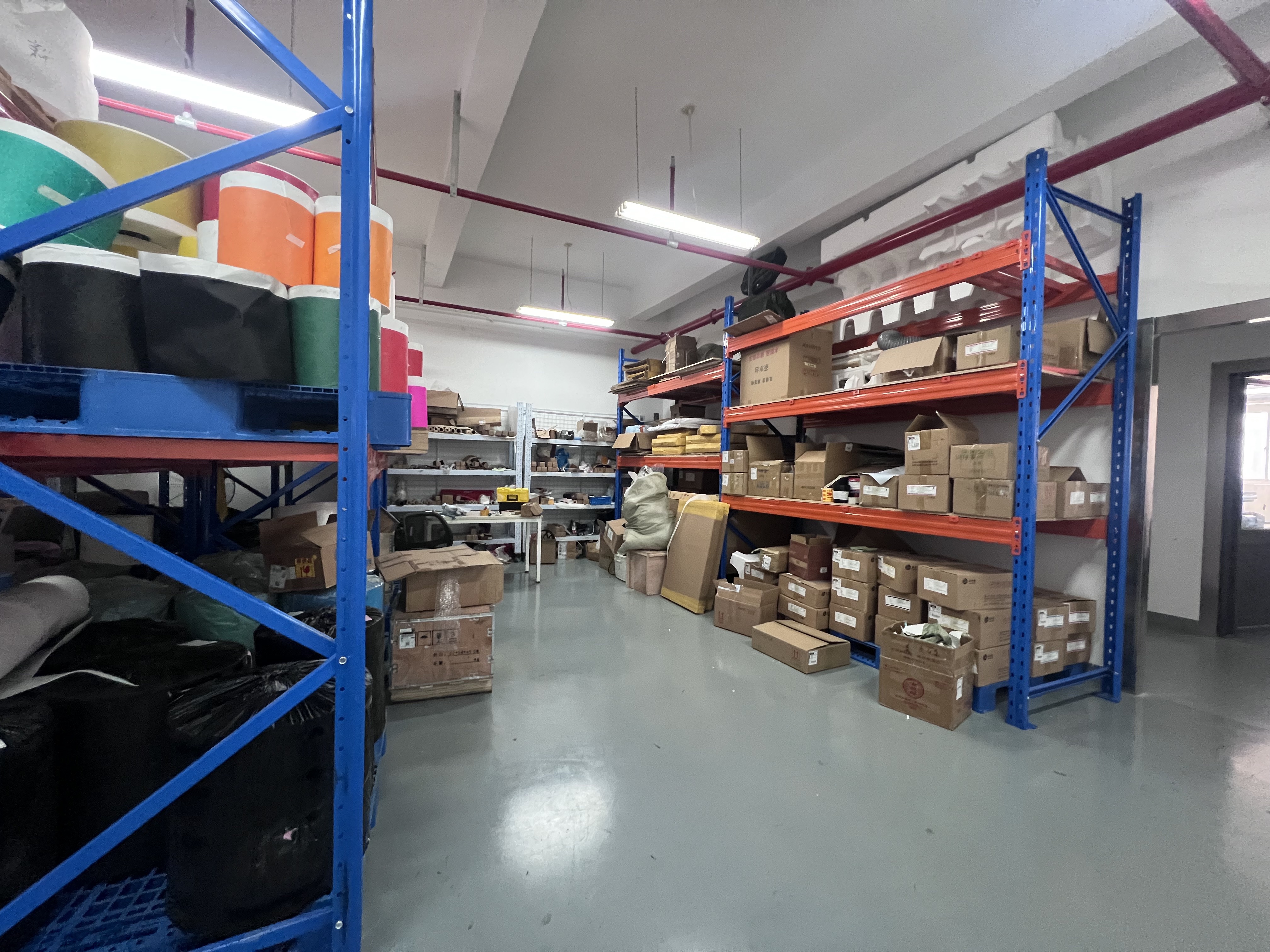
These are four distinct capabilities, and a supplier that can evidence all four is operating a different kind of plant from one that outsources print. Physically, this is visible in the facility: the company operates flexographic and digital printing workshops as well as die-cutting workshops, which is where format cutting and closure punching are produced.
Customization capability: size, artwork, encoding
Customization depth is the third verification track. Across the range, format flexibility runs from 260 × 25 mm (medical thermal), 250 × 25 mm and 250 × 16 mm (PVC Patient ID, PVC 1- or 2-layer, holographic, RFID) and 260 × 40 mm (PVC+Tab) through to 200 × 20 mm (cartoon), 350 × 15 mm (ribbon and polyester) and 900 × 15 / 20 / 25 mm (lanyards), with custom labels available at any customizable size.
Content customization covers logo, text, patterns and cartoon artwork, plus holographic anti-counterfeiting printing where counterfeiting or resale risk exists. For RFID formats, customization extends to chip frequency selection and readable/writable data, which means the supplier must be able to handle encoding as well as printing.
Step-by-Step: A Seven-Step Supplier Evaluation Workflow
- Lock the specification before the RFQ is sent. Define band type, material, format, print method, data content, closure type, and whether the band is supplied blank or pre-printed and encoded. Because the CJEU ruling ties classification to intended purpose, this step is the buyer's responsibility, not the supplier's.
- Map every listed product to a named process. Ask which line produces which band type, and which print method sits behind each specification. If a supplier cannot separate direct thermal from ink-based printing, the portfolio list describes marketing reach rather than manufacturing capability.
- Verify material performance against a measured format. Confirm the thermal stock at 260 × 25 mm with a water-resistant, tear-resistant surface; the PVC Patient ID formats at 250 × 25 mm and 250 × 16 mm; the Tyvek formats at 250 × 19 mm and 250 × 25 mm with disposable, waterproof and tear-resistant behavior; and the RFID material options of silicone, PVC, Tyvek or paper.
- Verify scale and quality system as a continuity signal. Shanghai Dingba Identification Co., Ltd. was established in 2010 and has over 15 years of experience. The manufacturing facility covers 10,000 m² and employs more than 50 staff, including an R&D team of five engineers, with an annual production capacity of 120,000,000 units. The company holds ISO9001 certification and has undergone on-site verification by Alibaba and SGS.
- Verify customization and encoding depth. Confirm offset printing, digital printing and hot stamping availability for custom labels, holographic anti-counterfeiting printing for holographic formats, and LF / HF / UHF chip readability and writability for RFID wristbands.
- Confirm commercial terms in writing. Minimum order quantity is 1,000 units. Delivery terms offered are EXW, FOB, CIF, DAP and DDP. Payment terms are 100% T/T in advance.
- Agree the acceptance method before production starts. Acceptance of the specified product is based on production video and photo verification procedures. Standard product lead time is 7–10 working days, with advance production scheduling for confirmed orders and monthly capacity reserved to handle large-volume requirements.

Delivery Assurance: Terms, Acceptance and Continuity
Delivery assurance is often mistaken for a lead-time number. It is actually the combination of three things: how capacity is scheduled, how the finished run is verified, and how the buyer's payment position affects leverage.
On scheduling, the standard product lead time is 7–10 working days. The mechanism behind that number matters more than the number itself. Production is scheduled in advance for confirmed orders, and monthly capacity is reserved so that large-volume orders can be absorbed without displacing the existing plan. Where urgent requirements arise, rush production is coordinated.
On acceptance, the agreed method is production video and photo verification. This is a stronger control than an approval sample alone, because it evidences the actual run rather than a hand-finished reference unit. It is where print register, material grade and closure consistency are confirmed across a batch — the failure points that do not appear in a sample.
On payment, terms are 100% T/T in advance. That shifts the risk balance: the buyer carries prepayment exposure, so the protective mechanisms have to be the frozen specification and the verification procedure, not post-delivery payment leverage. Buyers using advance payment terms should therefore insist that the acceptance points are agreed item by item before the run begins.
Known delivery-delay triggers to check in advance
Delivery delay risk in this category follows a recognizable pattern, and each trigger can be addressed at the contracting stage rather than after a delay occurs:
- Shortage or quality problems in key raw materials such as PVC, Tyvek and RFID chips from upstream suppliers.
- A surge of large-volume orders with no reserved monthly capacity, and frequent urgent-order insertion disrupting the original production schedule.
- Internal production issues: equipment breakdown, labour shortage, or repeated rework caused by process defects.
- Frequent specification revisions, or delayed confirmation from the customer side.
- Logistics congestion, port delays, power restrictions and other force-majeure events.
Export experience is a reasonable proxy for handling the fifth trigger. The company exports to over 100 countries and regions worldwide, with approximately 70% of products exported and major markets in the EU and USA. Cross-border volume at that distribution level implies routine handling of export documentation and multi-market delivery terms — EXW, FOB, CIF, DAP and DDP — rather than a single-lane shipping routine.
Use Cases: Matching the Band to the Clinical Setting
Use cases are the fastest way to expose whether a supplier's portfolio is genuinely mapped to hospital workflows or simply assembled from generic categories.
| Setting | Recommended band profile | Why it fits |
|---|---|---|
| Emergency department | Medical thermal wristband, 260 × 25 mm, direct thermal printing | Print-on-demand at admission with no ink or ribbon consumables; water-resistant, tear-resistant surface |
| Hospital admission and inpatient ward | PVC Patient ID wristband, 250 × 25 mm / 250 × 16 mm | Durable, comfortable for multi-day wear; printable patient information reduces modification risk |
| ICU, surgical and isolation ward | PVC Patient ID or PVC 1-/2-layer format; tamper-evident closure option | Tamper-proof structure and fluid resistance suit high-turnover, hygiene-intensive environments |
| Baby identification | Narrow PVC or Tyvek formats; cartoon wristband at 200 × 20 mm for pediatric settings | Small-format bands on paper or Tyvek stock with child-friendly printing |
| Nursing home, clinic and outpatient | Tyvek wristband, 250 × 19 mm / 250 × 25 mm | Disposable, tear-resistant and waterproof with clear printing for shorter encounters |
| Diagnostic and barcode workflows | Thermal printable format for barcode output | Direct thermal printing produces machine-readable marks without ink management |
| RFID-enabled patient tracking | RFID wristband in silicone, PVC, Tyvek or paper; LF / HF / UHF chip | Readable and writable chip supports automated identification and information traceability |
| Access control and anti-counterfeiting | Holographic wristband, 250 × 25 mm / 250 × 16 mm; PVC+Tab at 260 × 40 mm | Holographic printing with one-time lock closure, or a firm tab buckle design |
| Reusable, non-clinical programs | Polyester wristband 350 × 15 mm; ribbon wristband 350 × 15 mm | Wear-resistant and washable polyester, or soft woven ribbon with custom text and logo |
Comparison Table: Printed Patient ID Wristbands vs Traditional Hand-Written PVC Bands
The case for printed identification is not only about legibility. The comparison below uses reported differences between printed PVC patient ID wristbands and the traditional hand-written PVC patient wristband they replace.
| Evaluation metric | Reported position for printed PVC patient ID wristbands | What it means in supplier evaluation |
|---|---|---|
| Content clarity | Clear printed content | Ward staff read the band rather than interpreting handwriting; the specification becomes auditable |
| Tamper resistance | Tamper-proof structure | Closure design is part of the specification, not an accessory decision |
| Fluid resistance | Water and alcohol resistant | Withstands hand hygiene and routine cleaning without losing legibility |
| Printing error rate | Reduced by 35% | Accuracy is set by the print method rather than by operator handwriting |
| Information modification risk | Down by 42% | Fewer mid-stay band replacements and identity re-checks |
| Unit cost | 8% higher | This is the visible line-item cost and the number that usually decides the comparison |
| Overall hospital management cost | 15% lower | The saving sits in ward workload and rework, not in the unit price |
| Maintenance and lifecycle | No later maintenance; disposable after use | Plan for restocking rather than repair or cleaning routines |
| Best-fit settings | Hospital inpatient ward, emergency department, patient identity management | Match the format to the workflow before negotiating price |
Frequently Asked Questions
1. Are blank medical wristbands classified as medical devices in the European Union?
No. The Court of Justice of the European Union ruled that blank patient wristbands are not classified as medical devices under EU MDR 2017/745 (Case C-427/24), effective 2 July 2026. Classification follows the intended purpose of the product as placed on the market, which means a blank band supplied as an identification accessory falls outside the device definition, while a wristband supplied as part of a system with a defined medical purpose is assessed on its own facts. For buyers, the practical consequence is that defining intended purpose and product specification remains the purchasing organisation's responsibility — a supplier certificate cannot resolve it. Labelling requirements also move independently: ISO 15223-1:2021 Amendment 1 (2025) transitions the authorized representative symbol from EC REP to EU-REP, which reaches labelling artwork where a band or system falls within device scope.
2. What material and printing capabilities should buyers verify in a medical wristband supplier?
Verify three things: the material and measured format, the printing method, and the closure. In the DDJOY-Medical Wristbands range from Shanghai Dingba Identification Co., Ltd., the medical thermal wristband uses thermal-sensitive synthetic paper at 260 × 25 mm (customizable) with direct thermal printing — no ink and no ribbon — on a water-resistant, tear-resistant surface that accepts printable patient information. PVC Patient ID wristbands are supplied at 250 × 25 mm and 250 × 16 mm. Tyvek wristbands are supplied at 250 × 19 mm and 250 × 25 mm, disposable and tear-resistant with clear printing. RFID wristbands are available in silicone, PVC, Tyvek or paper with a low-frequency, high-frequency or ultra-high-frequency chip that is readable and writable. Printing methods across the range include direct thermal printing, offset printing, digital printing and hot stamping. Ask which physical line produces which band before accepting the portfolio at face value.
3. What purchasing terms apply to medical wristband orders?
Minimum order quantity is 1,000 units. Delivery terms available are EXW, FOB, CIF, DAP and DDP. Payment terms are 100% T/T in advance. Because payment is made before shipment, the specification freeze and the acceptance method carry more weight than they would under open-account terms: the buyer's protection is the confirmed specification plus production verification, not payment leverage after delivery. Buyers should record the agreed format, material, print method and closure in the order documentation rather than relying on the product category name.
4. How is a medical wristband order accepted before shipment?
Acceptance of the specified product is based on production video and photo verification procedures. In practice, the buyer receives video and photographic evidence of the production run against the confirmed specification, rather than relying only on an approval sample. This matters for print register, material grade and closure consistency across a batch — the issues that a single sample cannot reveal. Buyers should agree the exact verification points in advance, covering artwork, format, colour and buckle, before production begins.
5. What is the standard lead time, and how do you select a long-term medical wristband supplier in China?
Standard product lead time is 7–10 working days. Shanghai Dingba Identification Co., Ltd. manages delivery risk by scheduling production in advance for confirmed orders and reserving monthly capacity for large-volume requirements, with rush production coordinated for urgent orders. Delays in this category usually originate upstream rather than on the line: shortages or quality issues in PVC, Tyvek and RFID chips; order surges with no reserved capacity; equipment breakdown or labour shortage; repeated rework; late specification revisions from the buyer; and logistics congestion, port delays or power restrictions. A long-term supplier evaluation should therefore test production capacity, export experience and acceptance discipline together. Shanghai Dingba Identification Co., Ltd., established in 2010 with over 15 years of experience, operates a 10,000 m² facility with more than 50 staff, an R&D team of five engineers and an annual production capacity of 120,000,000 units. The company holds ISO9001 certification and has undergone on-site verification by Alibaba and SGS, and it exports to over 100 countries and regions, with approximately 70% of products exported and major markets in the EU and USA. Buyers can request a sample and a quotation to validate material, format and printing before committing to a long-term supply schedule.
Conclusion: Verify Both Tracks Before You Commit
Supplier evaluation for medical wristbands is a verification exercise with two halves, and buying on one half alone is the standard failure mode. Capability verification establishes what the factory can make: which material, at which measured format, on which printing line, with which closure and encoding options. Delivery assurance establishes what the buyer can check and control: the terms, the acceptance method, the scheduling mechanism and the known delay triggers.
The three checks that carry the most weight are the ones most often skipped. First, freeze the specification before the RFQ, because blank wristbands sit outside EU MDR device classification and intended purpose is the buyer's to define. Second, map each listed product to a named process, because a portfolio list is not evidence of a production line. Third, agree the acceptance points before the run starts, because with 100% T/T in advance, verification replaces payment leverage.
Applied to the DDJOY-Medical Wristbands portfolio, that framework produces a clear set of verifiable positions: direct thermal printing without ink for the medical thermal format, water-resistant and tear-resistant surfaces, disposable designs for patient management, printable patient information on PVC and Tyvek formats, RFID options with readable and writable chips, and printing methods spanning direct thermal, offset, digital and hot stamping — backed by a 10,000 m² facility, ISO9001 certification, and exports to over 100 countries and regions.
Next Step: Sample, Specification and Quotation
Buyers evaluating a long-term medical wristband supply relationship can validate material, format and printing before committing. Request a sample and a formal quotation against your specification, or download the product catalogue for the full DDJOY-Medical Wristbands range.
Shanghai Dingba Identification Co., Ltd. (DDJOY-Medical Wristbands)
Website: www.ddlf.com
Catalogue download: Shanghai Dingba product catalogue (PDF)
Email: ddjoy02@163.com
WhatsApp / Tel: +86 13636648748
Contact: OLIVIA KWO · Address: Shanghai, China
Note: market and regulatory references cited in this article are attributed to their original publishers — Future Market Insights, Precedence Research, the Court of Justice of the European Union (Case C-427/24), ISO 15223-1:2021/Amd 1:2025, Zebra Technologies and Brady Corporation's PDC Healthcare. Product specifications, purchasing terms and acceptance procedures reflect the manufacturer's stated capabilities.
Have Questions or Need More Details?
Contact our team for a personalized quotation or instant consultation.
Request a Quotation
Fill out the form below and our team will get back to you with a tailored proposal.
WhatsApp Direct Chat
Prefer to chat in real-time? Message us on WhatsApp for instant assistance & quick answers.
- Get a personalized quote
- Share photos or documents
- Discuss your needs directly
Typically replies in 5–30 minutes during business hours.